
Little Berry - Case study
Little Berry provides monthly, subscription-based, age-appropriate lesson plans and purposeful activities, with materials designed for children aged 1–6.
As an early UX project, it played a key role in shaping my understanding of user-centered design principles.


Little Berry
"Everything kids need to learn, create, and grow — in one box".


Problem and Solution
Problem
Busy parents and stay-at-home caregivers struggle to keep young children engaged while building consistent routines and early learning skills. Despite abundant online content, finding age-appropriate, purposeful activities is often time-consuming and overwhelming, while preschool options can be costly for families who prefer home-based learning.
Solution
Little Berry offers a monthly, subscription-based activity kit with age-appropriate lessons, clear guidance for caregivers, and all required materials—making it easy to support consistent routines and screen-free early learning at home.

understanding the user
Field and Survey Research
Research Goal
The goal of the research was to understand the daily challenges faced by parents, the routines of children, and how families currently support early learning at home.
Research Methods
-
Field research:
Observed and spoke with parents to understand how they plan daily activities, manage time, and engage their children in learning at home.
-
Survey research:
Conducted an online survey with 20 parents of children aged 1–6 to validate patterns observed during field research and identify broader trends.
Survey Focus Areas
-
Family size and preschool attendance
-
Experience with subscription boxes
-
Preferences for learning formats
-
Expectations from children’s activity kits
-
Budget considerations
-
Device usage
Key Insights
The survey revealed several strong patterns:
-
80% of participants have at least two children
-
50% had previously purchased kids’ activity boxes
-
90% expressed interest in buying a subscription box for their children
-
80% wanted daily independent activities combined with basic academic learning
-
100% preferred hands-on learning over digital learning
-
90% primarily used mobile devices to access the internet
-
Preschool attendance varied:
-
30% part-time
-
70% not attending
-
10% full-time
-
-
90% of participants felt the existing subscription box is expensive.
Research Summary
Parents want structured, age-appropriate, hands-on activities that fit into busy daily routines. Clear instructions, purposeful learning, and ease of use are critical—especially for families relying on home-based education rather than full-time preschool.
"Inspirational Quotes"


Competetive Analysis
Key Takeaways
Most competitors focus on older children (5+ years) or STEAM-heavy learning, often at a medium to high price point. This reveals an opportunity for a solution that offers affordable, age-appropriate, hands-on learning specifically designed for children ages 1-6 years.
Key Competitors
-
Bitsbox — Coding-focused subscription box for children ages 6–12 years
-
Brickyard Building Blocks — Educational building toys for ages 4+
-
KiwiCo — Project-based STEAM subscription boxes for all ages.
-
Learn & Climb — Educational toys supporting early skill development
-
Little Passports — Educational subscription boxes with geography and culture themes
-
Lovevery — Premium subscription boxes designed for early childhood development
Market Overview
The children’s activity box market encompasses a range of subscription-based learning kits and educational toy brands that prioritize hands-on, age-appropriate learning experiences.
How Little Berry Differentiates
Little Berry was designed to address these gaps by focusing on simplicity, structure, and early childhood needs:
-
Designed specifically for ages 1–6, supporting early developmental milestones
-
Purposeful, hands-on activities that build foundational academic and life skills
-
Daily activity structure to help parents establish consistent routines
-
Clear, parent-friendly instructions that reduce planning time and effort
-
Balanced pricing, making early learning more accessible
-
Offline-first experience, aligned with parents’ preference for hands-on learning
Our Potential User- Persona

Heather, the stay-at-home Mom
Age: 37
Family: Married, two childrens: (ages 2 and 4)
Occupation: Stay-at-home mom
Primary device: Mobile
About Heather
Heather is a hands-on, detail-oriented parent who enjoys spending quality time with her children. She values structure and wants to build meaningful daily routines that keep her kids engaged while supporting early learning at home.
Goals & Motivations
-
Spend quality time with her children
-
Keep her kids engaged throughout the day
-
Build consistent daily routines
-
Support early academic learning in a fun way
Pain Points
-
Difficult to find age-appropriate, fun, and accessible learning materials online
-
Managing home life is overwhelming as the primary caregiver
-
Children spend too much time watching TV (around 3 hours daily)
-
Kids lose interest quickly when playing with the same toys repeatedly
-
Preschool costs are high, making full-time enrollment challenging
Needs:
-
Simple, ready-to-use activities
-
Hands-on learning that reduces screen time
-
Affordable and reasonably priced

Emily, the Working Parent
-
Age: 34
-
Family: Married, one child (age 3)
-
Occupation: Full-time working professional
-
Work Style: Hybrid (office + remote)
-
Primary device: Laptop
About Emily
Emily is a busy working parent who wants to make the most of the limited time she has with her child. She cares deeply about early learning but often feels guilty about relying on screens or passive activities after long workdays. She values convenience, clarity, and activities that fit easily into her routine.
Goals & Motivations
-
Make quality time count after work and on weekends
-
Support early learning without extensive planning
-
Reduce screen time without adding stress
-
Feel confident she’s doing “enough” for her child’s development
Pain Points
-
Limited time to research or plan learning activities
-
Mental load after work makes decision-making hard
-
Many activities feel too complex or require extra prep
-
Inconsistent routines due to work schedules
Needs
-
Quick, low-prep activities
-
Clear instructions that work in short time blocks
-
Hands-on learning alternatives to screens
-
Flexible, good-value pricing
Contact
Contact Form
Support / Email
Starting the design
Sitemap
I built user-focused flows to ensure that my personas can successfully complete their key objectives while reducing the existing pain points.
Home
About Little Berry
Why Little Berry
Educational Approach
About Little Berry
Choose Age Group
Receive Monthly Box
Learn & Play at Home
Activities
Age 3–4
Age 5–6
Age 6–7
Plans & Pricing
Subscription Options
What’s Included
FAQ
For Parents
Daily Routines
Screen-Free Learning Tips
Caregiver Guidance
Reviews / Testimonials
Account
Sign Up / Log In
Manage Subscription
Order History
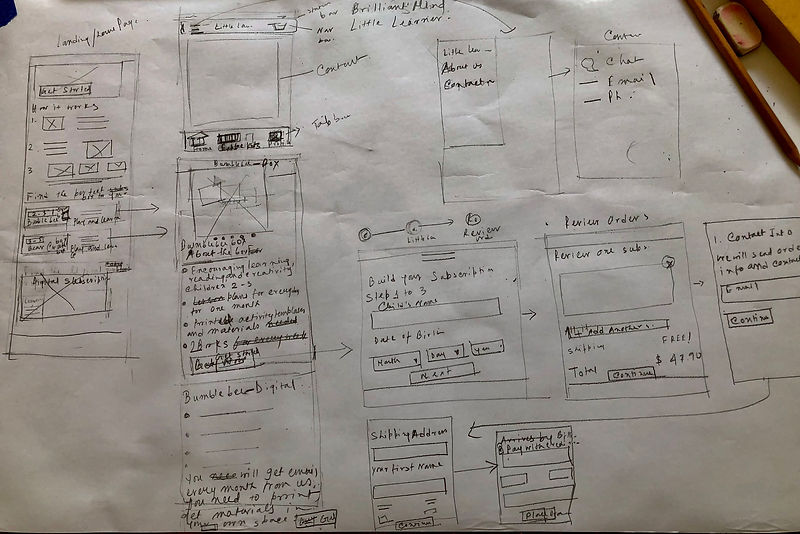
Paper Wireframes
Focusing on the core features identified during user research, I sketched the first wireframes using pen and paper.
Digital Wireframes
Design decision:
I chose a responsive website over a native app because Little Berry is a subscription-based physical product. Parents primarily use the platform for browsing, purchasing, and managing subscriptions—tasks that work best across both desktop and mobile devices without adding screen time for children.
Desktop

Hi-Fidelity Visual Design
Mobile

Website Homepage
Mobile Homepage

Website Homepage

Mobile Homepage

Key Takeways
-
I learned that parents want to understand what Little Berry is and what they’ll get within a few seconds.
-
I learned that showing box contents + price plans early works better than long descriptions.
-
I learned that reviews + shipping/cancel details are key to building trust and helping parents subscribe.